
ESSRBOND GS 500Stop Active Leaksin Concrete — Permanently
Polyurethane injection grout for crack sealing, concrete leakage control, and void filling. Used by waterproofing contractors across Mumbai and Maharashtra for structural crack repair that lasts.
Untreated concrete cracks compound the problem
Water-bearing cracks in structural concrete, retaining walls, and basements do not stabilise on their own. Hydrostatic pressure, seasonal temperature movement, and continued water ingress all actively widen the crack over time.
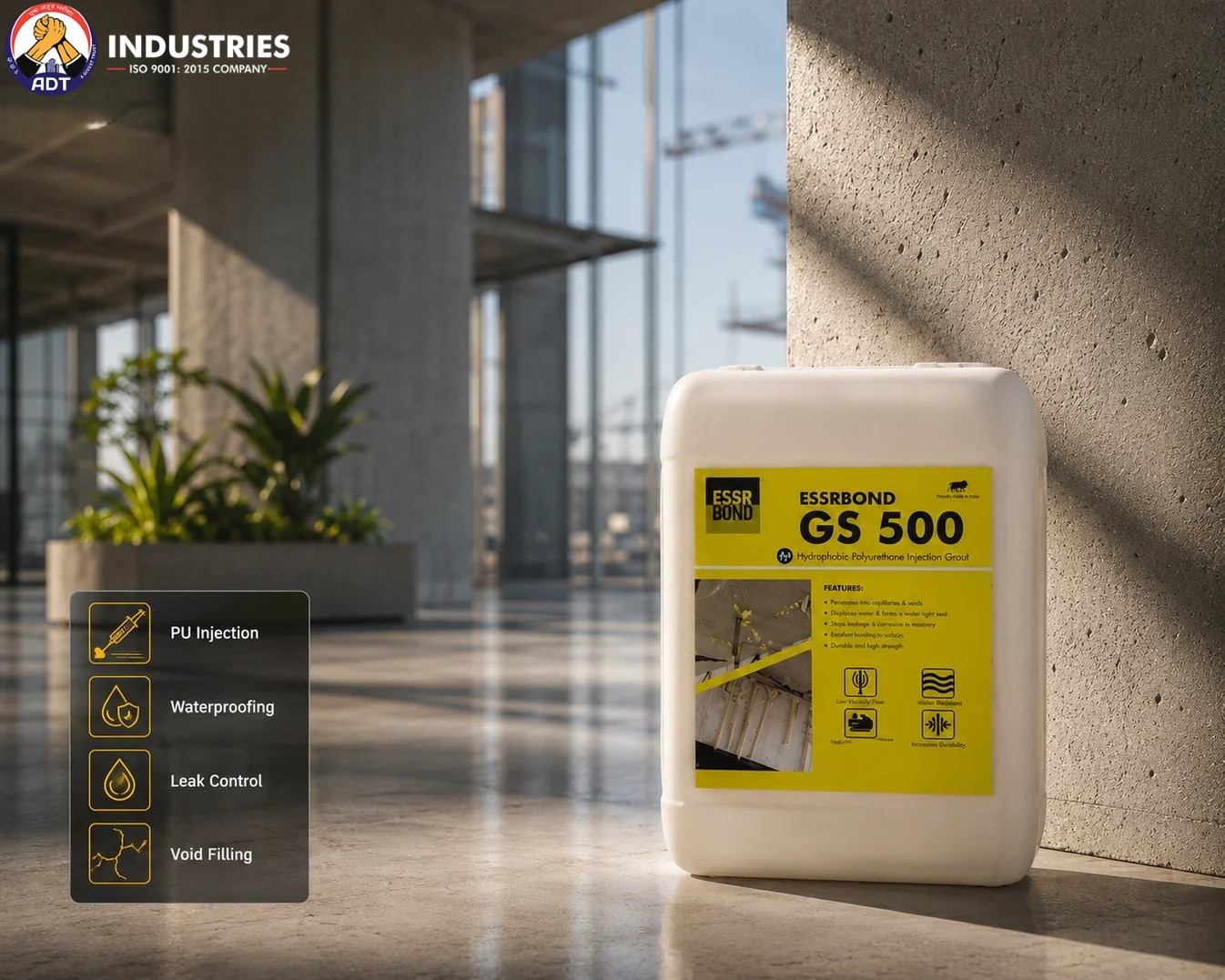
ESSRBOND GS 500 — Polyurethane Injection Grout
A single-component PU injection grout for active wall crack repair, concrete leakage control, and void filling. Reacts with moisture inside the crack and expands to form a permanent watertight seal.
How PU injection works on site
4 steps. Contact our team before starting if your crew is new to injection grouting.
Crack Preparation
Clean the crack face and remove loose concrete, dust, and debris.
Packer Installation
Drill and insert injection packers at 150–200mm intervals along the crack line.
Injection
Inject ESSRBOND GS 500 under pressure until grout bleeds from the adjacent packer.
Cure and Inspect
Allow foam to cure, remove packers, fill holes, and inspect for complete coverage.
Common questions about PU injection grouting
Yes. It is moisture-activated and reacts with water present in the crack. It is the correct product for wet, damp, and actively flowing crack conditions. Surface coatings cannot stop active leakage — injection is the right method.
PU injection is for wet, active, or moisture-bearing cracks where water control is the goal. Epoxy injection is for dry, stable structural cracks where restoring load capacity is the goal. Using the wrong product for the condition is a common site error.
Injection packers (13mm or 16mm), a hand-operated or pneumatic injection pump, connecting tubing, and a drill. Contact ADT Industries for equipment guidance before starting work.
Consumption depends on crack length, width, depth, and void formation behind the crack face. Contact our team with your site dimensions for a project-specific estimate.
Get pricing and availability
Share your requirement and we will respond within one business day.